Showing posts with label review. Show all posts

Monday, 1 April 2019

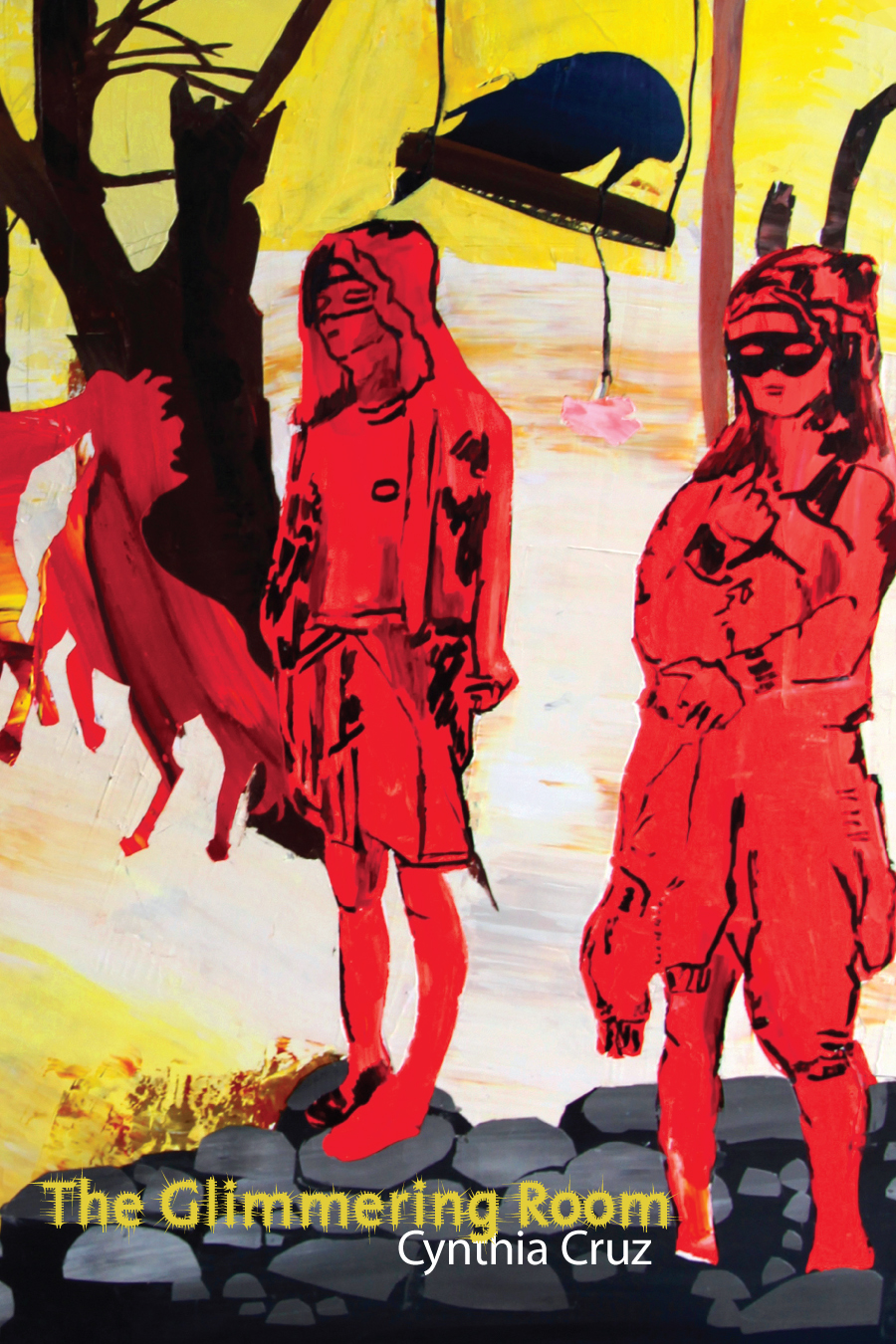
The Glimmering Room by Cynthia Cruz: First Impression & Poetry of Place


The Glimmering Room by Cynthia Cruz
“And us girls, with our pink plush
Unicorns, smashed on Paxil at the edge."
        – ‘Strange Gospels,’ p.17.

Associations can play an important role in the reader’s immediate impression to a writer’s creative work. At first, I did not like The Glimmering Room due to what I associated it with. The associations I had made these poems feel stale and ingenuine.

The juxtaposition of violence with pretty, girly things felt like it was just for the sake of it, almost like it was written with the ‘kinderwhore’ aesthetic (popularised by Courtney Love) in mind, and not much else. Girlhood, cake, ribbons, drugs, and so on… It almost lacked sincerity. Using a certain aesthetic/subculture for imagery or a theme in creative writing isn’t always a bad thing, in my opinion, but paired with the upsetting themes of eating disorders, child sex abuse, drug addictions, prostitution, etc. it initially bothered me and made it hard to read. Maybe that is my own sensitivity, as a reader, coming through.
My opinion changed when I read more about Cynthia Cruz and her poetics through an interview with The Rumpus. I realised that my initial impression had been premature. By looking at these poems with a different perspective – as poetry of place, or a type of social commentary, perhaps intertwined with the personal experiences of the poet – I found myself liking them more and more. 

The Glimmering Room subverts expectations in two ways:
  1. The contrast of sweet, girly imagery with violence.
  2. Presenting a side of California/America that people may not have thought of before, or want to think about. 

1       Pairing the cutesy, bubblegum-like images of childhood with dark themes is something that can shock and possibly alienate readers. I found myself alienated at first, but then I discovered that the imagery in The Glimmering Room helped push the core themes throughout the rest of the poems. It gives a sense of tragedy; that terrible things are happening to innocent young girls, when the most important thing happening in their lives should be getting an education, playing with friends, enjoying themselves – not being hooked on drugs, hospitalised, and exploited… 

Some people view California and the American Dream through rose-tinted glasses, especially people here in Europe who may not have been to America before. The vision can be like a sugar-coated fantasy – see Katy Perry’s song ‘California Gurls,’ as a perfect example of expectations for Californian life (along with Disneyland and the Silicon Valley). 

Cruz’s version of California is explored through the lens of a young girl trapped in an adult’s world, making it doubly as jarring to those that may not have considered the gritty realities of people who are living the complete reverse of the American Dream.  

Saturday, 30 March 2019

Thoughts on The Best of BE Festival

On a Wednesday evening a bunch of us from the Creative Writing/English departments took a trip to The Lowry in Salford, to see a show that most of us were ‘looking forward to’ in a sickly, nervous kind of way. None of us knew what the show was really about. None of us even knew the exact name of the performance. And nobody wanted to witness an accidental on-stage lobotomy on the off chance something DID go wrong.
This video was all we had to go off.

Best of BE UK 2019 Tour from BE FESTIVAL on Vimeo.

I was a bit nervous, I’ll have to tell you. Visiting the circus or seeing a stunt performance is something most people enjoy, yet there is always something in the back of the mind that says, “What if this goes wrong?” A nasty voice that whispers, “Will I see blood tonight?” as you try to find your seat. I think these natural, very human anxieties are what the Best of BE Festival played with.

At the end of the night, there was nothing to fear. I think I can speak for everyone when I say that we all came back with huge smiles and laughter, and that the performance continued to work its way into our conversations throughout the rest of the week. I enjoyed myself immensely.

Since all three acts in the Best of BE Festival seemed to be about provoking an emotional response in the audience, I will be sharing my personal thoughts and feelings on each one.

The first show was called ‘Take Care of Yourself’ and was performed by Marc Oosterhoff. In the beginning the performance reminded me a bit of an old-timey circus act crossed with a mime artist, as everything was silent with exaggerated movements and comical expressions. Oosterhoff silently put himself in danger and terrified everyone in the vicinity. He took twenty shots of whiskey and threw himself into backflips on the hard stage floor, threw knives and daggers around, and danced over mousetraps. Some people could not watch; I had to peek between my fingers at times! I think it’s human nature to be afraid when other people are doing things that are inherently dangerous, and this performance certainly gave me an adrenaline rush.

‘Someone Loves You Drive With Care’ by Tom Cassini came up next, and was equally as intense as the first act. If I’m honest I think this performance was a little bit too long for what it was, however. Perhaps the suspense made it feel longer.

Cassini spoke of his hands as being criminal. His voice was low, dark, and slow. When he wasn’t hammering nails into his nostrils or inserting a metal hook up his nose and into his mouth  ̶  uncannily resembling something out of a Saw movie at times  ̶  he talked about his melting home in the polar regions, of death, lies, violence, and his brother. Even his voice provoked a sense of anxiety in me, as I didn’t know what he was going to do or say next! It was unnerving, like listening to somebody you know to be a serial killer; even when they talk about mundane things, you know what they have done and what they are capable of.

This sinister persona Cassini put on could also be comical at times. When he told the audience to close their eyes, I felt like I couldn’t, as I was afraid to see something terrible when my eyes opened again. Fear, again, is something this performer used to play with his audience. One time we opened our eyes and he had moved to a new position on stage with his trousers around his ankles. The relief and absurdity made me laugh.

The third and last show by French performer Kulu Orr was my absolute favourite. Control Freak’ was extremely popular with everyone I spoke to on the trip, and we couldn’t stop chattering about it on the way back to university, despite being utterly shattered by that point. There was a lot of laughter in the auditorium throughout!

The Control Freak persona was blunt and sarcastic, almost robotic in more ways than one, but incredibly funny and likeable. He wore high-tech suits which could control the stage lighting, sound effects, and a recording/looping effect, which he used to make music and generally look like some kind of rainbow-coloured, magical robot.

By bouncing balls and making certain movements, he created some really beautiful songs, some of which could be quite classical like harpsichord and organ music, some electronic in a style which reminded me of New Order’s music, and some psychedelic like 60’s/70’s music similar to Cream. At one point he lit himself up all colours of the rainbow and changed shades by movements of his fingers. It was dazzling, and I’ve never seen or heard anything like it before.

At points I was wondering “is this really real?”, and perhaps that is a testament to just how incredible it was! There was a very short technological error and Control Freak was left on a dark stage for a moment, which is understandable considering just how wacky and innovative the technology was. But Orr did not break character for a second. He said: “Just a minute,”… a couple of seconds later, “Just a minute…”, and then a few seconds later… “Just another minute.” I was nearly in tears of laughter and the issue was quickly resolved. 

I can’t recommend The Best of BE Festival enough! It was a perfect evening filled with adrenaline, daredevils, dazzling lights, and laughter.

Saturday, 23 March 2019

Art Review: 'Allegro Strepitoso' by Carel Weight

Allegro Strepitoso by Carel Weight, 1932


Carel Weight's 'Allegro Strepitoso' was immediately my favourite piece of art at the Tate gallery in Liverpool. There's a kind of chaotic and comedic energy to this painting, something which made me grin in the gallery at the time, and still brings a smile to my face weeks later.

The exaggerated painting style and bright colours lends the piece a joyful, light-hearted feeling, despite the event of lions bursting from the cages perhaps not being so fun for the human visitors to the zoo. This must have been what inspired Weight’s friend to suggest the title of ‘Allegro Strepitoso’ for this piece, coming from the Italian words for ‘merry/lively’, and ‘noisy/clamorous’. If this painting could speak or make noise, I expect that it would make an awful row with screams, roars, chattering birds, and brass band music!

Weight’s painting was created in 1932 using oil paints and was inspired by childhood trips to the zoo with his mother. According to the Tate gallery websites’ description of this piece, the two women running from the lions were also modelled by the painter’s own mother. Using childhood memories and day trips is an interesting way of finding new ideas to work with, whether it be for artwork or creative writing. ‘Allegro Strepitoso’ is a painting that could easily trigger a creative response in writers; in fact, I already have a short story idea bubbling away!

This painting was part of an exhibit in the Tate called the ‘Ideas Depot’. Ideas Depot was co-curated with school teachers in Liverpool, with the belief that art is an essential part of people’s lives, which can inspire intellectual curiosity. I really appreciated the fact that this exhibit was made to inspire visitors to the gallery. Beneath the descriptions of artwork were questions based around the theme of the work  ̶  perfect for creatives seeking new prompts and ideas. 

Monday, 18 March 2019

Under the Shadow (2016): Horror Tropes with a Twist

“A woman should be more scared of exposing herself than anything.” – words said to Under the Shadow’s protagonist, Shideh, after she was arrested for running down the streets without a hijab in the middle of the night, her young child in tow.

Shideh narrowly escaped being publicly flogged for her misdemeanour. She was sent back in disgrace to the near-abandoned apartment complex she shared with her daughter. But did anybody question what they were running from?

From IMDb: "As a mother and daughter struggle to cope with the terrors of the post-revolution, war-torn Tehran of the 1980s, a mysterious evil begins to haunt their home."


Set in Tehran, the capital city of Iran, Under the Shadow is prefaced by a statement about the Iran-Iraq war (1980-1988). We see Shideh, a woman forced to leave her university studies behind for the crime of being ‘politically active’ during a revolution, drive home fully-covered, where she breaks down after realising her dreams of becoming a doctor have been crushed. After tensions rise in her household, her medic husband is stationed in Elam, a place considered to be right in the middle of the fighting. Shideh and their daughter Dorsa are invited to stay with his parents in a safer part of the country, yet Shideh was adamant that they would be fine in the Tehran apartment and resolved to stay. As missiles fall and the rest of the occupants abandon the apartment complex for a better quality of life elsewhere, viewers are made to wonder just what it would take for Shideh to pack up and leave herself. If the wailing war sirens, missile threats, and isolation weren’t bad enough, the sound of the wind, ever present through the gaping cracks in the building, carries foreboding…

Viewers are made to question which is scarier; the harsh, dangerous reality of living in a politically-unstable warzone with nearly no rights at all; or the dark thrill of paranormal suspense?

Unsurprisingly, reality is scarier than fiction. Perhaps this is where Under the Shadow falls flat. Had the focus been placed on the horrors of the Iran-Iraq war, and the impact on family units being broken up for compulsory military services, I believe this film could have been more harrowing – especially for Western, modern-day viewers (myself included) who haven’t had the misfortune of living in a warzone, and therefore haven’t truly acknowledged just how traumatic it can be.

Adding the horror genre to this kind of wartime situation does have its own intrigues, yet once viewers get past the setting and historical context, the horror tropes become just that – an add-on. While forces from both this world and the supernatural world join to make Shideh and Dorsa’s lives miserable, I can’t help but feel like we’ve seen this kind of film play out before. For example, StanleyKubrick’s The Shining; a mother and her child battle the horrors of their everyday lives (an abusive father/husband in place of war), and are faced with paranormal terror, all whilst being trapped in a secluded building they are forced to call home…

The stereotypical horror tropes become numerous and cliché once counted out; family dysfunction, a mother or parent that refuses to leave the situation until the haunting becomes unbearable, children that are ultra-aware of the paranormal, lighting and cinematography to create tension, characters who are trapped, creepy basements and attics, doors slamming or being unable to open, and ghostly aspects that manage to be unnerving but are vastly overdone within the genre (no facial features to the paranormal being, rushing jumpscares, and jerky movements). It’s my opinion that the horror genre needs more innovative plotlines, and jumpscares are too overdone nowadays to really shock viewers of modern-day cinema.

That being said, the link between Shideh being trapped both by her cultural situation and by the Djinn attempting to take control of her daughter, is an aspect which interests me. While it’s my opinion that the paranormal plotline detracts from what really makes Under the Shadow frightening, I appreciate the parallels. After all, it was being arrested for forgetting to wear a hijab which forced Shideh back into to the apartment complex she was running from.

Overall: ★★

Monday, 25 February 2019

Festen (1998): An Uncomfortably Realistic Farce


Irony, realism, and disquieting elements of farce mixed with tragedy is what comes to mind when I think of Thomas Vinterberg's 'Festen'. It is not a comfortable, lighthearted watch by any means. The combination of Dogme 95’s method of filming and the brutally honest storyline can be almost overpowering and anxiety-inducing. I was on the edge of my seat throughout the entire 105 minutes, barely daring to breathe or move!

From IMDb: "At Helge's 60th birthday party, some unpleasant family truths are revealed."

The camera is unsteady and moves around as it follows Christian, making his way to his old family home for father Helge’s 60th birthday. We are then introduced to Christian’s brothers and sisters as they also travel to their father’s mansion house, for what should have been a happy occasion. The viewer is thrown into the action of the story right away, with the loud, harsh noises of squealing tires on gravel paths, ringing bells, slamming of doors, shrieking car horns, strained motor engines, and aggressive slapping of backs and shoulders. Even in the opening scenes there is a chaotic, almost angry atmosphere (and this pretty much carries on throughout the entirety of the film). The aggressive shoulder slapping between Christian and his brother Michael clues us in to the fact that Christian isn’t exactly welcome at his father’s birthday party – we later find out why he isn’t welcome, in one of the most uncomfortable dinner party scenes I’ve ever had to watch…

There are no flashbacks or cuts to other moments in the narratives’ timeline, so as viewers we are forced to stay in the present, almost as though we too are family members forced to stick through the severely humiliating, tragic dinner party as silent witnesses. The atmosphere is almost claustrophobic as Christian reads out the green speech revealing the dark secrets kept in his family (ironically at Helge’s request).

Saving face is probably one of the most important key themes to this film. Even Christian’s brutally honest speech did nothing to phase the rest of the guests at bourgeoise Helge’s party – he is met by stony silence, laughter, and rejection through his many attempts to raise awareness to the issue of Helge’s violent past. The visually and auditorily aggressive ways the house guests dance, scream with laughter, and party, looked almost like a way to save face and forget about the tension throughout the embarrassment of Helge’s birthday.

Through Christian’s very bold move of revealing the abuse they suffered as children, the anger and despair shown by him and his siblings, Michael and Helene, becomes very understandable and easily sympathised with. While Michael is every bit as wild, chaotic, and violent as the story itself, his extreme emotions and unpredictability made him probably the most interesting character, in my opinion. Towards the end of the film he redeemed himself a lot in my eyes by bringing a sense of justice to Helge, who deserved what he got, and much more.

In a way, watching Festen feels almost like being a fly on the wall, watching as the events in Helge’s family unfold. Being filmed entirely on a 35mm handheld camera made Festen raw and intimate; the style is eerily reminiscent of watching an old documentary or family home video. I really do think this film will be sticking with me for a long time, and it will be a while before I forget what happened at Helge's 60th birthday celebration… Part of what makes this film so powerful and memorable is how realistic it feels, both in storyline and in the method of filming.

Overall: ★★★★☆
 
Designed by Beautifully Chaotic